

During our recent time at the NAB Show in Las Vegas, we saw a lot of the latest gear and technology, quite a bit of it centered around the growing use of augmented reality (AR) and its close cousin, virtual reality (VR), in television production environments. Everything from the amazing camera cranes that can perform complex movements in any direction, repeatable to the millimeter, thanks to computer control, all the way to the computers that can generate lifelike backgrounds that can barely be distinguished from actual, physical structures.
Like everything else on the show floor, artificial intelligence is taking this technology even further. One of the most talked about demonstrations we saw was that of Vizrt, which showed off a new AI-powered keying system that eliminates the need for a “green screen” (those big walls painted in a fluorescent color to be electronically removed in a television control room in a process called “chromakey”)
Most people are familiar with chromakey's use in presenting weather segments during local TV newscasts. The process is how the meteorologist appears to be standing in front of the computer-generated weather graphics.
One of the recent prominent examples of deploying AR/VR facilities in local television stations has been the CBS Owned Stations, which have been moving to deploy a large-scale AR studio across its stations since KPIX debuted the technology in 2023. Its ninth station to debut the technology, WWJ, known as CBS Detroit, launched it earlier this month.
So yesterday, when severe weather rolled into the Dallas-Fort Worth market, we thought it would be interesting to watch how one of those new AR studios would be integrated into the weather presentation of CBS’s KTVT (aka CBS Texas) during a real-time, breaking weather situation.
This is what we saw when we first started watching the station, via the CBS News app on our Apple TV:
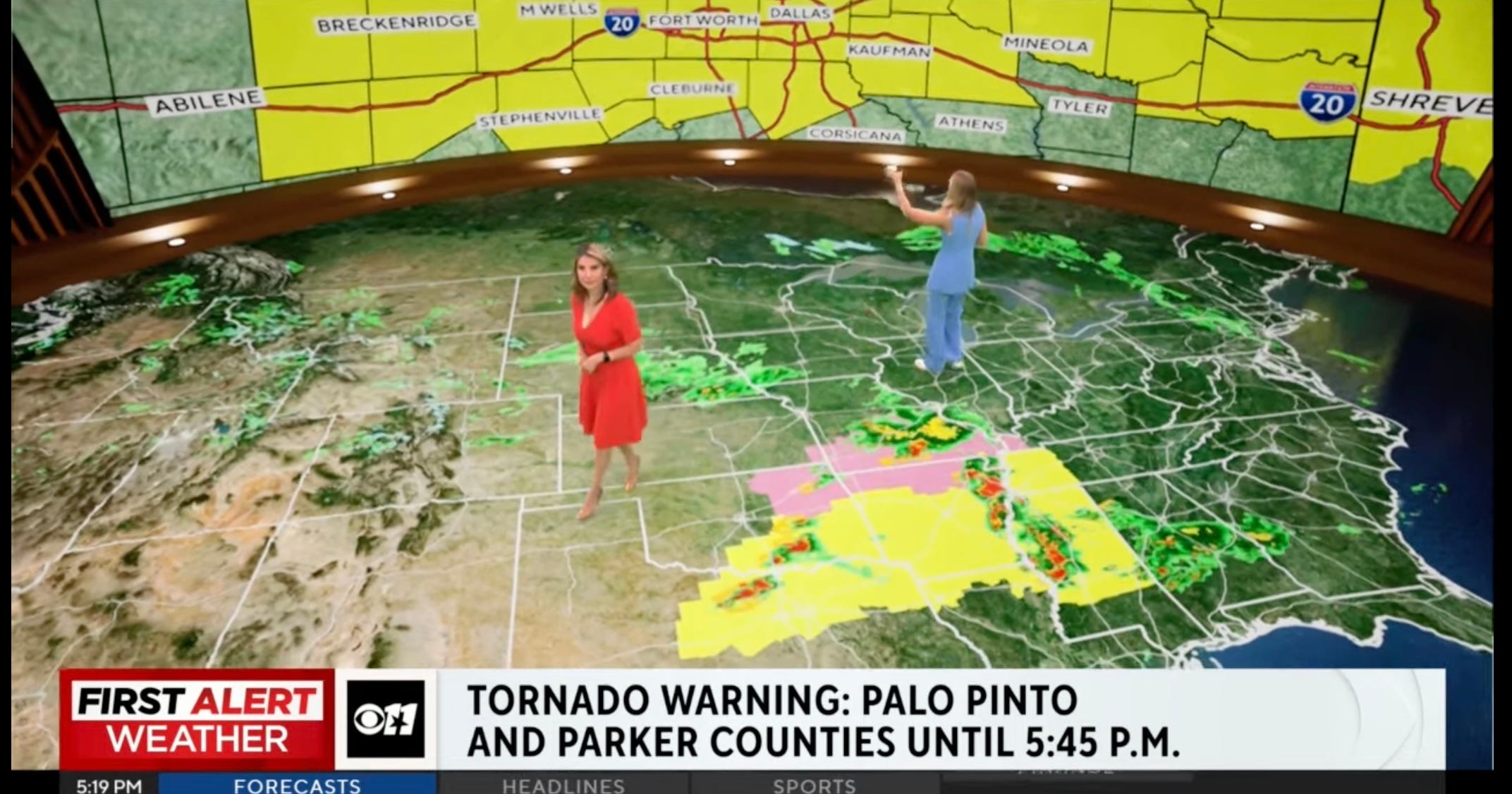
This shot triggered an immediate flashback to a difficult conversation with a meteorologist some years ago, when we were trying to stress the importance of “staying tight” on the local weather situation, because viewers put a bigger priority on seeing the situation “where they live — rather than halfway across the country!”
(As we recall now, by this point in the conversation, things had gotten a little heated, and voices may have been raised. It wasn’t the only time that happened.
Back on KTVT, the camera changed relatively quickly to show this angle:
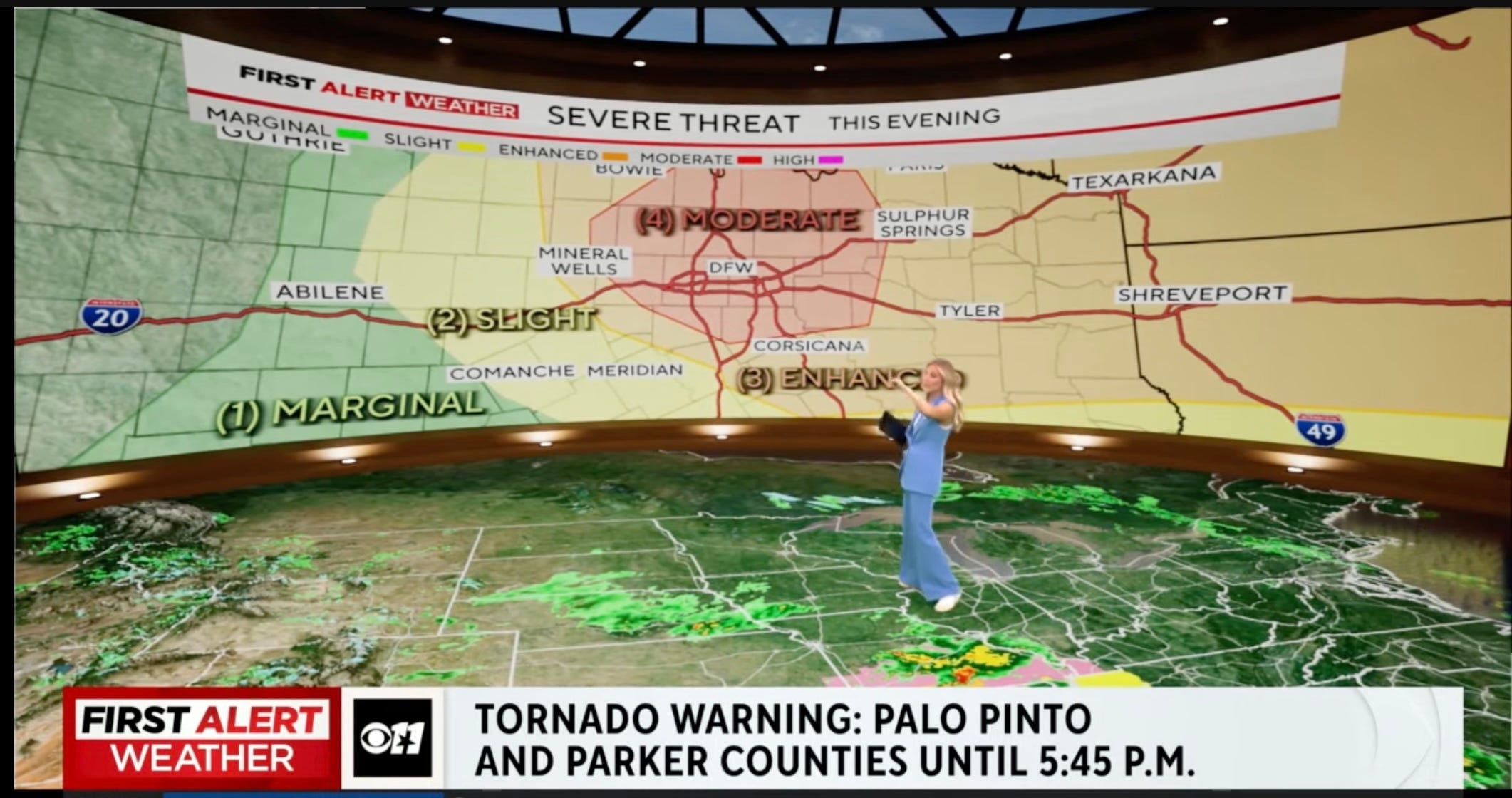
Frankly, this didn’t improve things that much. While there was so much on the screen at one time, not that much of it was the actual “Metroplex,” which is the core of KTVT’s coverage area. It all certainly looked “big” on the screen, but we weren’t sure that it was superior to the more standard-looking severe weather presentations that were airing at the same time on other stations.
But we continued to sample the coverage as the situation progressed and more severe weather developed in the area. Before long, we saw this look on the air:
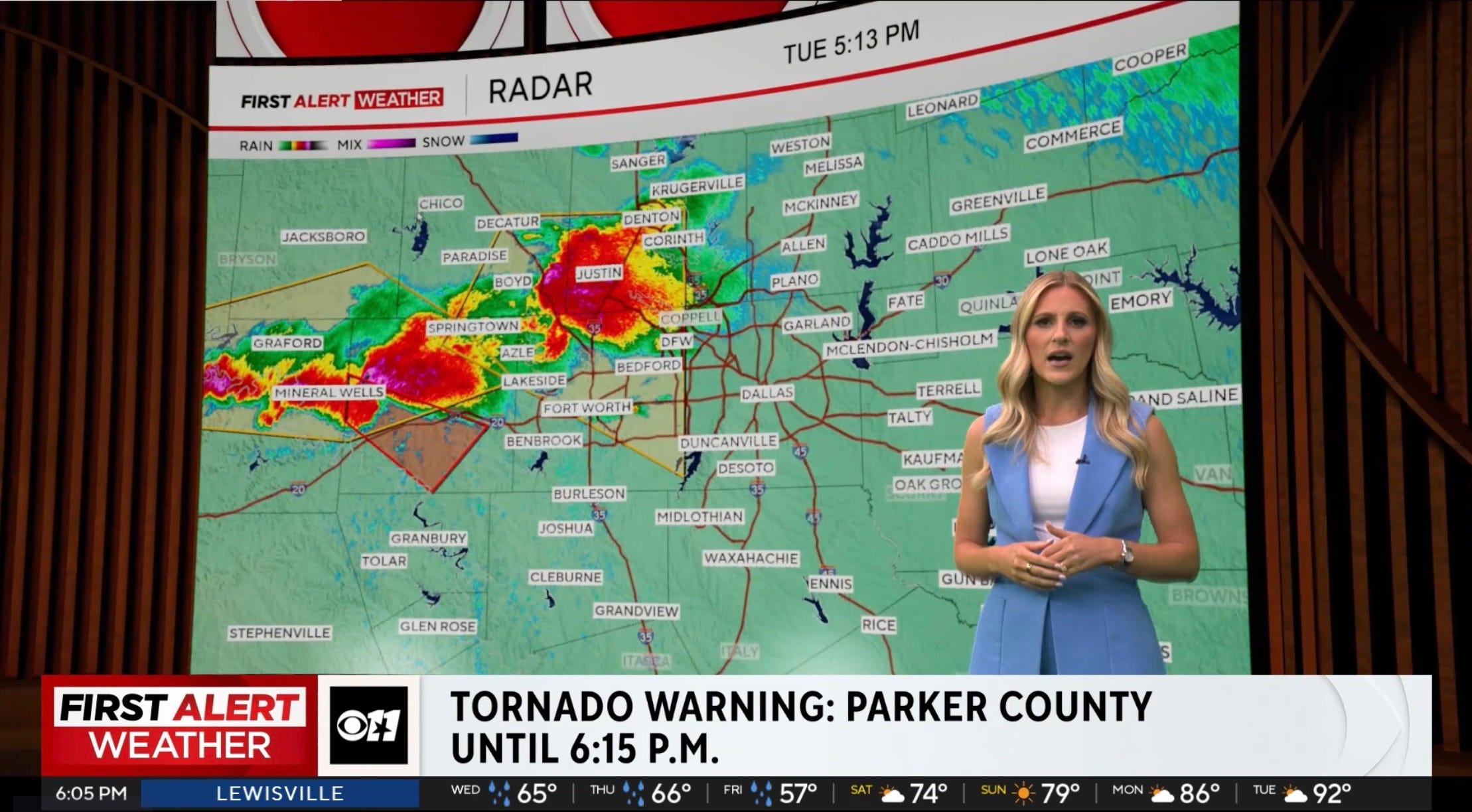
Well, we were happy to see a somewhat tighter view of the radar, but now we were struggling to read the names of locations, even on our 85-inch flat screen. We do admit to having eyes that have grown a little weaker with age, but this would definitely be in the category of those small lines on the chart that we struggle with during an eye exam. And we can’t even imagine what use this would be, if our screen were a tablet—or worse yet, a smartphone.
Plus, we have to ask why they are wasting so much area on both sides of the screen? To get the full “faux wood” experience? As we continued to watch, this shot would shrink even more as the decision was made to add the live feed from one of the station’s live stormtrackers.
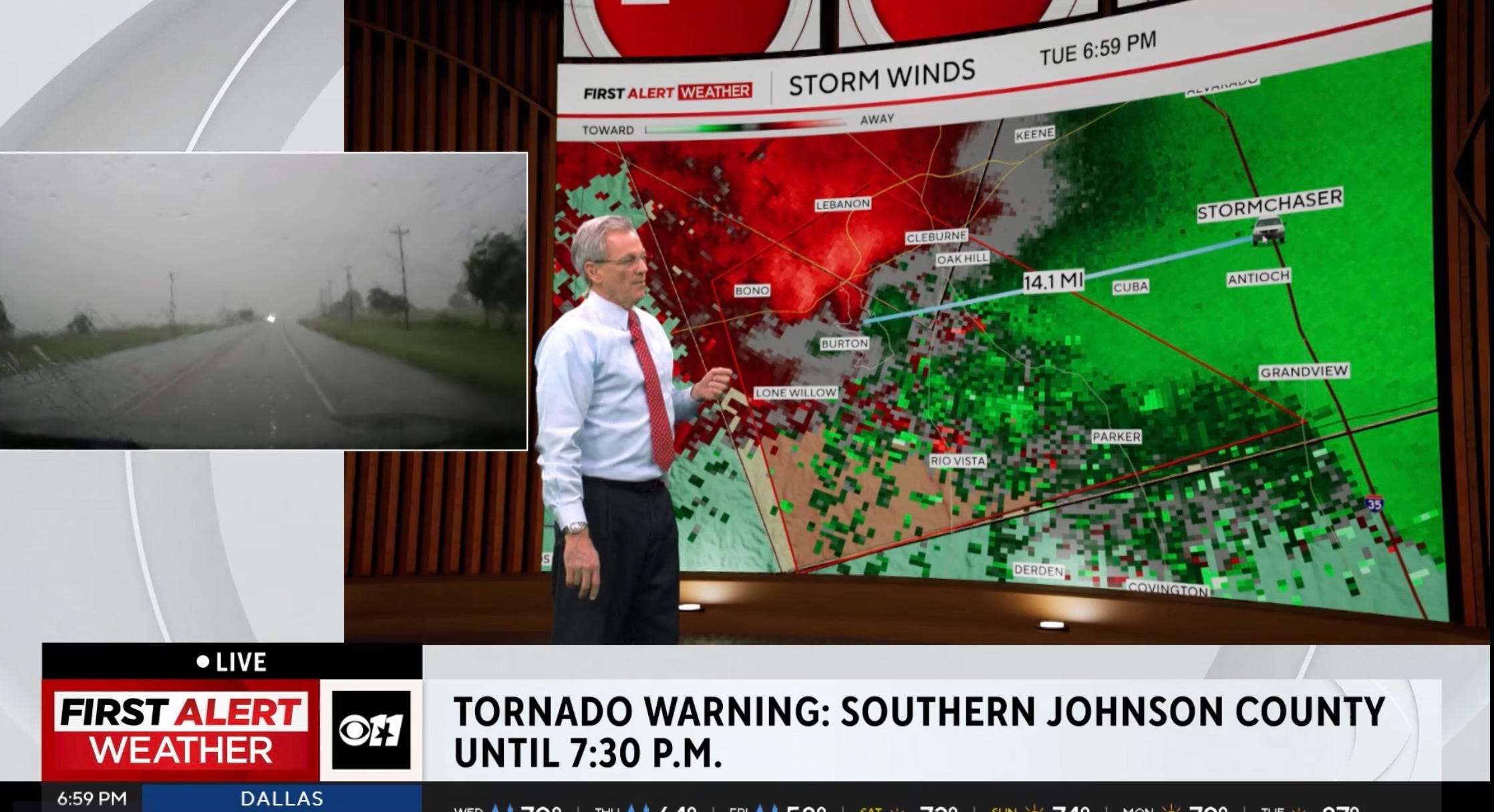
You’d be forgiven if, like us, you couldn’t find the location of “Cuba” on the screen. (That would be a city in Texas, not the island nation in the Caribbean.)
Look, we get it: this is the cool new toy management put in, and if you are on the KTVT “First Alert Weather Team,” you likely don’t really have any choice in the matter. The meteorologists were doing a credible job of covering the situation and letting their viewers know what was happening. This kind of continuing coverage, what we often call “wall-to-wall” coverage, is unscripted and requires some tolerance from the viewer of the improvisational nature of the production.
But we just have to wonder if, in this threatening situation, the television screen “real estate” can be put to better use? For contrast, take a look at this frame from the live streaming severe weather coverage of popular YouTube meteorologist Ryan Hall in the same time frame:
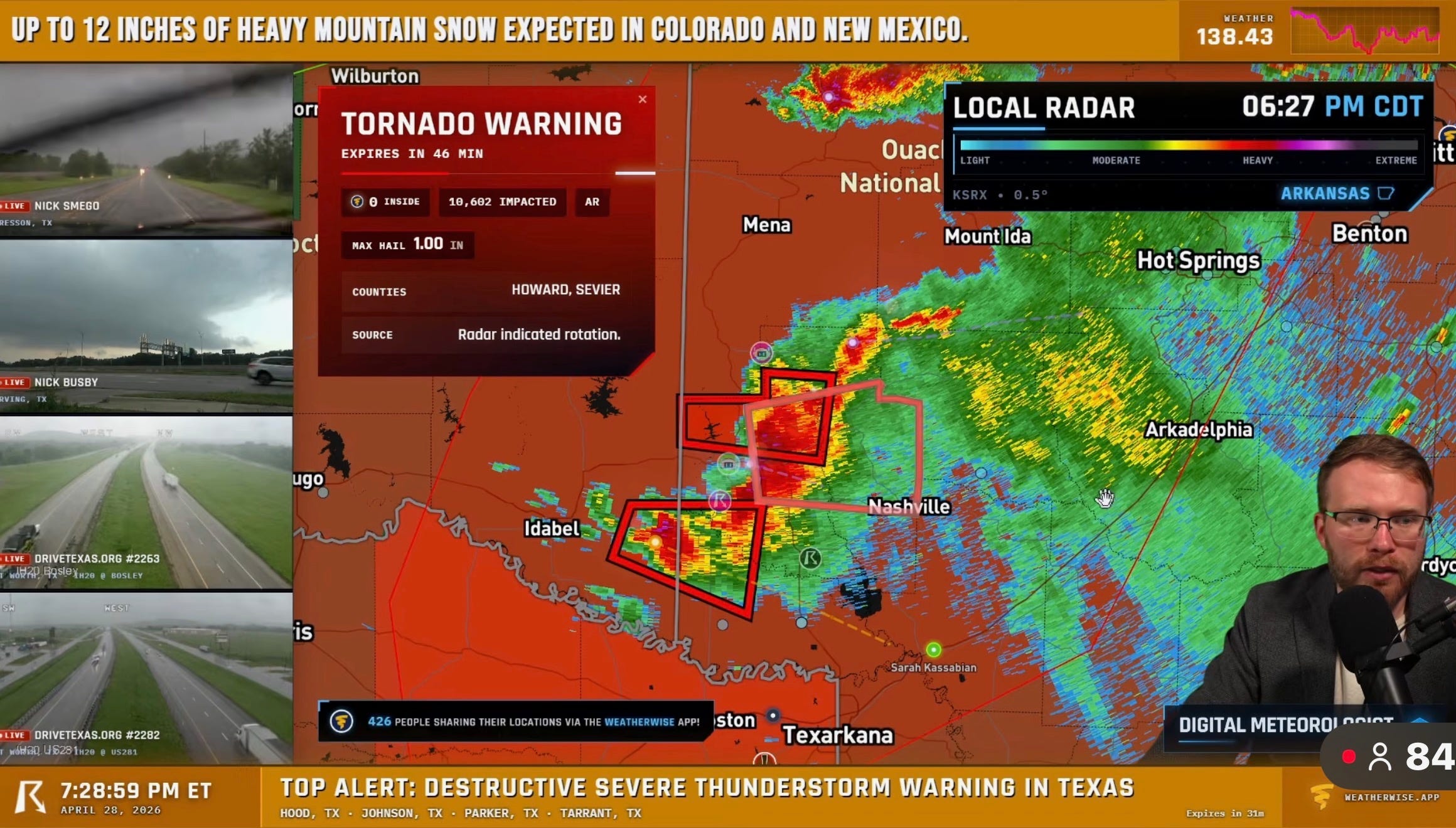
Now we admit right away, this might be too “information dense” for some viewers. But if we lived in Nashville (the one in Arkansas, rather than the more famous one in Tennessee), we would definitely be grateful for having this presentation available—on any screen.
By the way, Hall had roughly 90,000 watching his coverage online when we snapped this screenshot. We wouldn’t be surprised if that was comparable to KTVT’s audience size at the same time, and we’d bet his technology set-up costs less.
Our point is this: a station can have the “latest and greatest” technology, but if it doesn’t substantially improve the experience for the viewer, especially in a moment where getting the relevant information quickly and easily really matters, how much is it worth?
We’re certainly willing to acknowledge that this AR-based technology is still early in its deployment for this specific weather purpose. More design work is likely to refine and hopefully improve the look. That said, CBS is spending no small amount of money to roll it out across all its television stations—and even on its network news — all in hopes of attracting more people to watch its local news and weather coverage.
They might want to remember the lyrics of Lennon and McCartney. whose song said it well, way back in 1964.
-30-